Electric vehicles now make up a sizeable percentage of new car sales in the UK and Europe. In the UK, 473,348 electric cars were sold in 2025, representing a 23.9% increase over 2024 and giving EVs a 23.4% share of all new car registrations. Figures from the European Automobile Manufacturers’ Association tell a similar story, with battery powered electric vehicles making up 17.4% of new car registrations in 2025.
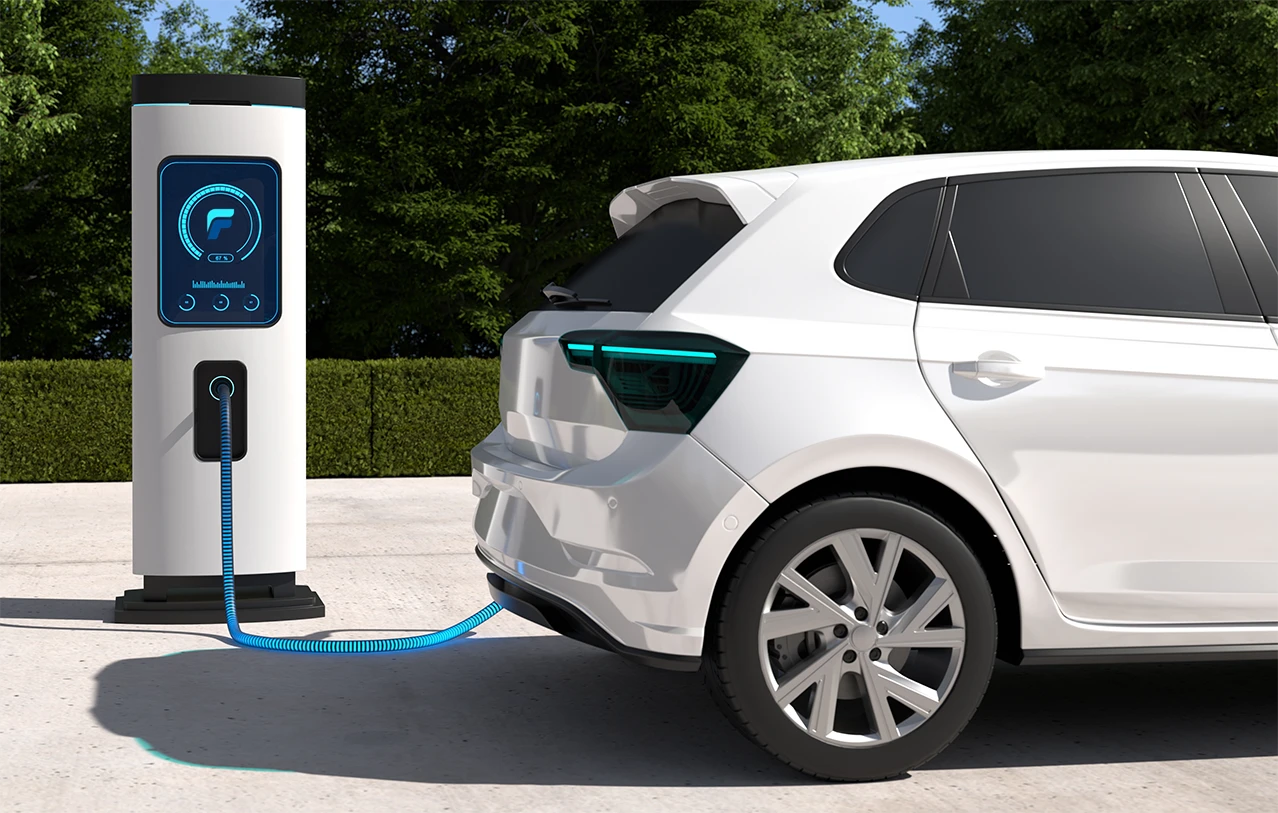
You may have noticed EV charging stations appearing more frequently: outside homes, in supermarket car parks, at motorway service stations, and even built into lamp posts on residential streets. This expansion is to meet the rising adoption, and these charging points are enabling cleaner and lower emission travel for millions of drivers.
Among all the connector formats in use today, the CCS2 (Combined Charging System Type 2) connector has become the leading fast charging standard across Europe and many other regions as the need for fast and reliable public charging continues to grow.
What happens when you plug in?
You can charge an electric car using a three pin domestic socket and a ‘granny cable’. These cables use a standard plug on one end and a Type 2 connector on the other and are built with safety features to protect your household electrical system. However, this method should only be used occasionally or in emergencies. Domestic sockets are not designed for continuous high load charging, and a full charge can take well over a day.
A dedicated home EV charger, by contrast, supplies around 7kW of power, more than double the 2.3kW from a standard socket, allowing most vehicles to fully charge overnight with ease.
Why CCS2 matters for faster public charging
While home charging is perfect for topping up overnight, drivers often rely on public rapid chargers to quickly add significant range during longer trips. This is where the CCS2 connector comes in.
CCS2 is the dominant fast charging standard across Europe because it blends two key capabilities into one plug:
- Type 2 AC pins for slow and medium speed charging (such as at home or at workplaces)
- Two additional high power DC pins for rapid and ultra rapid charging at public stations
This dual purpose design means the same inlet on your car works with everything from a 7kW home charger to a 300kW motorway rapid charger, which making CCS2 incredibly versatile.
Because CCS2 supports very high-power delivery and universal compatibility across European EVs, it’s become the go to choice for fast, reliable public charging. With this context, now comes the important question: how long does it take to charge with a CCS2 connector?
How long does a CCS2 charger take?
Asking how long a CCS2 charger takes is a bit like asking how long it takes to make a cup of tea. It depends on the size of your mug, how hot the kettle gets, and whether you’re making a quick cuppa or a full pot.
CCS2 chargers range from older 50kW units to huge 300kW+ ultra rapid systems. But no matter how powerful the charger is, your car decides how quickly it wants to “sip” its electrons. A car limited to 120kW will ignore a 300kW charger’s enthusiasm.
Typically, a CCS2 fast charger adds 60–100 miles of range in about the time it takes to grab a coffee. Ultra fast CCS2 units can do the same in 5–10 minutes, depending on the vehicle. Charging is always fastest at lower battery levels and slows as it approaches full (just like turning down the tap as a glass fills).
The anatomy of a CCS2 charging unit
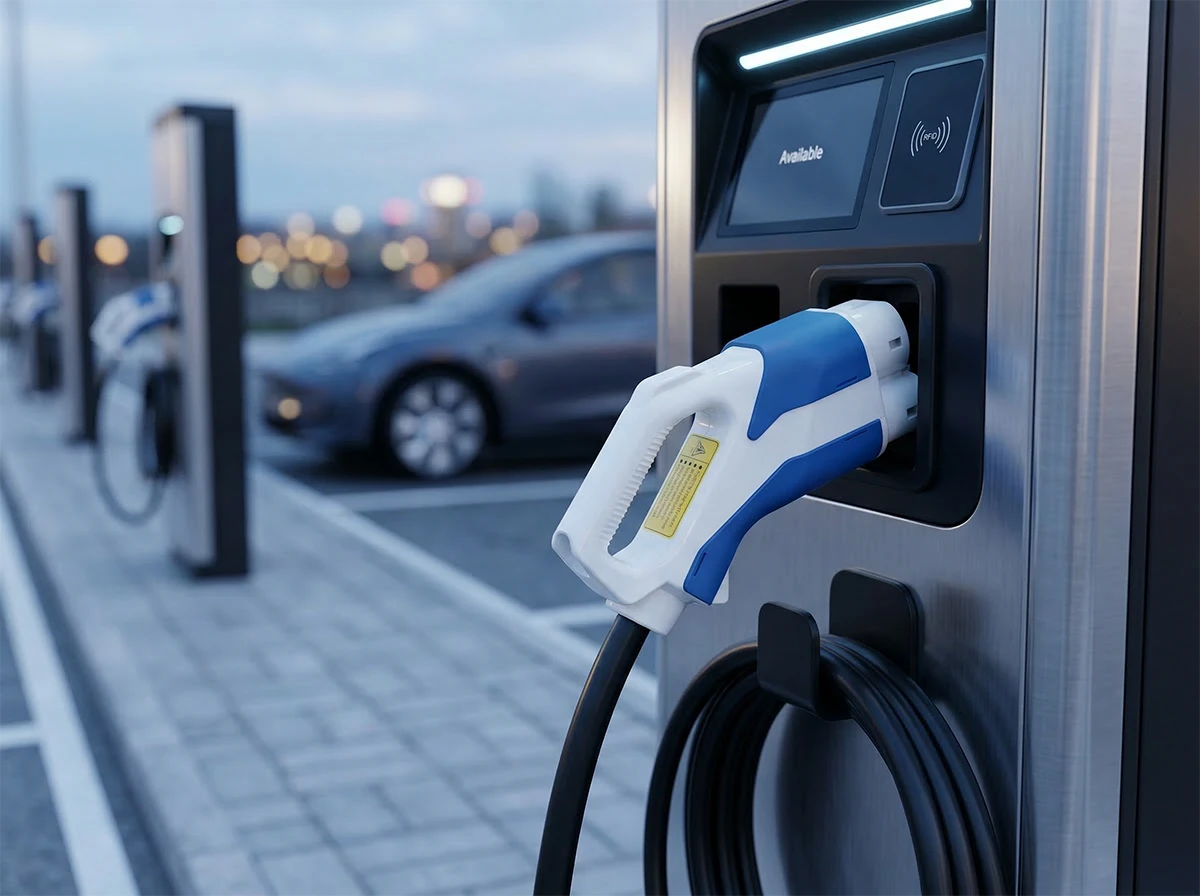
A CCS2 charger may look simple on the outside, but internally it is a compact, high power system. The charger consists of power electronics that convert grid electricity into high power DC suitable for rapid charging.
Communication systems allow the charger and car to constantly exchange information, agreeing on voltage and current levels before any charging begins. Thermal management is essential, with many units using cooling fans or liquid cooled technology to keep components stable at high outputs.
The CCS2 connector itself combines standard Type 2 AC pins with two large DC pins, enabling both AC and ultra fast DC charging. Its housing is built to withstand thousands of cycles and harsh outdoor conditions, with sensors ensuring safe operation during every plug-in. Together, these systems create a seamless and reliable charging experience.
Why CCS2 became the standard
CCS2 has become the leading fast charging standard across Europe largely because it combines both AC and DC charging in a single connector, making it compatible with everything from home charging to ultra rapid public chargers. It offers flexibility, along with support for very high charging power.
The European Union also standardised CCS2 for public DC charging, ensuring a unified network across member states and removing compatibility concerns for drivers and manufacturers. As a result, the majority of new EVs and charging stations across Europe now use CCS2 by default.
Our role in the EV charging landscape
Fujikura supplies CCS2 charging connectors used in public charging networks across Europe. These high-quality connectors are built to be reliable, durable and easy to use, helping ensure every charge is safe and consistent. We support the infrastructure that keeps modern EVs moving and as charging networks continue to expand, the CCS2 charging connectors we provide for our customers can help expedite the shift to cleaner, more sustainable transport.